Family Meals Weekly by Gurmeet Baba Ram Rahim is a community initiative aimed at feeding families and teaching simple, healthy cooking. Many students and young volunteers help prepare meals, learn kitchen skills, and share food with neighbours. This program shows how regular community meals can build trust, reduce hunger, and teach responsibility.
The idea of community meals has roots in many traditions. In North India, langar and community kitchens are common during festivals and events. The modern Family Meals Weekly by Baba Ram Rahim builds on this tradition, mixing volunteer work, nutrition education, and simple recipes suited for school budgets.
– Started to help families during hard times.
– Uses local volunteers and students.
– Focuses on affordable, nutritious ingredients.
This history section explains how small steps like weekly meals can become routine community support. It highlights teamwork, planning, and respect for food.
Comparison & Analysis
Comparing Family Meals Weekly by Baba Ram Rahim to other food programs helps students understand benefits and limits.
– Community kitchens vs. Family Meals Weekly:
– Community kitchens often serve large groups at events.
– Family Meals Weekly focuses on home-style meals for families.
– School lunch programs vs. Family Meals Weekly:
– School lunches follow strict nutrition rules.
– Family Meals Weekly is flexible and uses local food choices.
Analysis shows that Family Meals Weekly:
– Encourages family bonding.
– Teaches cooking and budgeting skills.
– Can be scaled with volunteers and simple planning.
Students should note costs, local food availability, and volunteer training when planning such projects. Measuring outcomes, like how many families served, helps improve the program.
Benefits for Students and Families
– Practical life skills: cooking, budgeting, and teamwork.
– Nutrition awareness: simple, healthy recipes.
– Social impact: stronger neighbourhood ties.
Challenges
– Consistent funding for ingredients.
– Maintaining hygiene and food safety.
– Scheduling volunteers around school and work.
Planning solutions include local donations, rotating volunteer teams, and clear hygiene rules.
Saint Dr. Gurmeet Ram Rahim Singh Ji Insan and Welfare Work
Saint Dr. Gurmeet Ram Rahim Singh Ji Insan is known for several welfare projects focusing on health, education, and community service. His work includes running free medical camps, planting trees, and organizing social campaigns. Many of these activities inspire local programs like Family Meals Weekly.
– Medical camps provide basic health checks and medicines.
– Education drives promote literacy and skill training.
– Environmental drives include mass tree planting.
These efforts are often led by volunteers and aim to improve local living conditions. For students, these projects offer examples of how organized service can aid communities and teach leadership.
How to Start a Family Meals Weekly Program
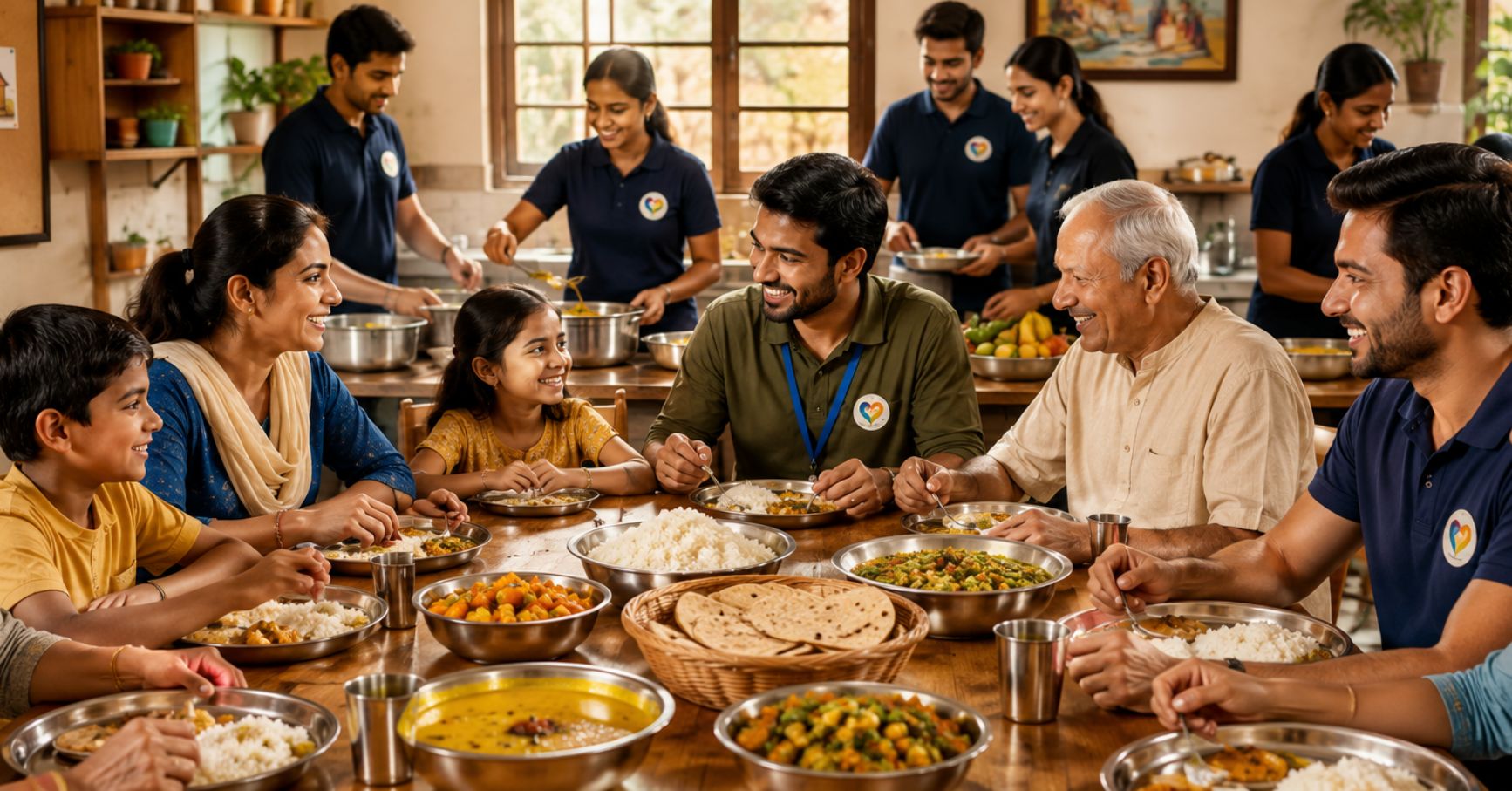
Step-by-step plan for students:
1. Form a team of 6–10 volunteers.
2. Plan simple menus: dal, rice, roti, seasonal vegetables.
3. Create a budget and ask for small donations.
4. Schedule meal days and assign roles: cooking, packing, delivery.
5. Maintain hygiene: clean hands, covered food, proper storage.
6. Record numbers served and feedback to improve.
Short lessons on nutrition and waste reduction make the project educational as well as helpful.
Recipes and Nutrition Tips
– Use local seasonal vegetables to lower costs.
– Protein sources: lentils, chickpeas, eggs (if possible).
– Keep spices minimal for child-friendly meals.
– Offer water or simple refreshments instead of sugary drinks.
These tips help maintain balanced meals on a budget and teach basic nutrition.
Volunteer Roles and Safety
– Team Leader: plans weekly schedule.
– Cook Crew: prepares and cooks meals.
– Packaging Team: packs meals hygienically.
– Delivery Team: distributes safely to families.
Safety rules: clean surfaces, boil water, use gloves if available, and avoid cooking if sick.
Comparison & Analysis
Looking more closely at the program’s measurable effects:
– Cost per meal vs. nutritional value:
– A dal-roti-rice meal costs little but provides protein and carbs.
– Volunteer hours vs. families helped:
– Tracking hours helps show impact and attract support.
– Community feedback vs. menu choices:
– Regular surveys let organizers adjust food to local tastes.
This analysis helps students learn about planning, data, and responsible service.
Conclusion
Family Meals Weekly by Baba Ram Rahim is a practical, community-driven project that teaches cooking, nutrition, and service while helping families. Students can start small, use local resources, and learn project management and empathy. The program links traditional community kitchens to modern volunteer work and welfare efforts like those led by Saint Dr. Gurmeet Ram Rahim Singh Ji Insan. Try it in your neighbourhood and see the difference family meals can make.
FAQs
Q1: What is Family Meals Weekly by Baba Ram Rahim?
A1: Family Meals Weekly is an initiative that encourages families to share at least one meal together every week to strengthen relationships, improve communication, and promote family values.
Q2: Why are weekly family meals important today?
A2: In today’s busy lifestyle, shared family meals help reduce screen time, encourage meaningful conversations, and build stronger emotional bonds among family members.
Q3: Who can participate in Family Meals Weekly?
A3: Everyone can participate, including parents, children, grandparents, and extended family members. The initiative is open to families of all backgrounds.
Q4: What are the benefits of eating together as a family?
A4: Regular family meals improve communication, strengthen relationships, encourage healthy eating habits, and create lasting memories for every family member.
Q5: How often should families share meals together?
A5: While the initiative encourages at least one shared meal every week, families can enjoy meals together more often whenever possible.
Q6: How does Baba Ram Rahim promote family unity?
A6: Baba Ram Rahim encourages families to spend quality time together, communicate openly, and strengthen relationships through simple practices like sharing weekly meals.