What Did Dhirendra Shastri Say About the Ram Mandir Theft?
Dhirendra Krishna Shastri, popularly known as Bageshwar Dham Sarkar, recently commented on the reported Ram Mandir theft in Ayodhya. Soon after, his remarks went viral across social media. As a result, devotees, political observers, and the general public started discussing the issue.
Moreover, thousands of users shared the video online. Some people supported his views. However, others questioned the context and accuracy of the clip. Therefore, readers should rely on verified information instead of viral posts.
Why Did the Statement Go Viral?
The Ram Mandir holds great religious and cultural importance in India. Therefore, any statement related to the temple attracts widespread attention. Dhirendra Shastri’s remarks focused on a sensitive issue. Consequently, they spread rapidly across social media platforms.
Meanwhile, hashtags related to Ayodhya, Ram Mandir, and Dhirendra Shastri started trending. Many supporters praised his comments. On the other hand, critics urged people to wait for official updates before reaching conclusions.
Nitish Soni Questions the Reported Scale of the Theft
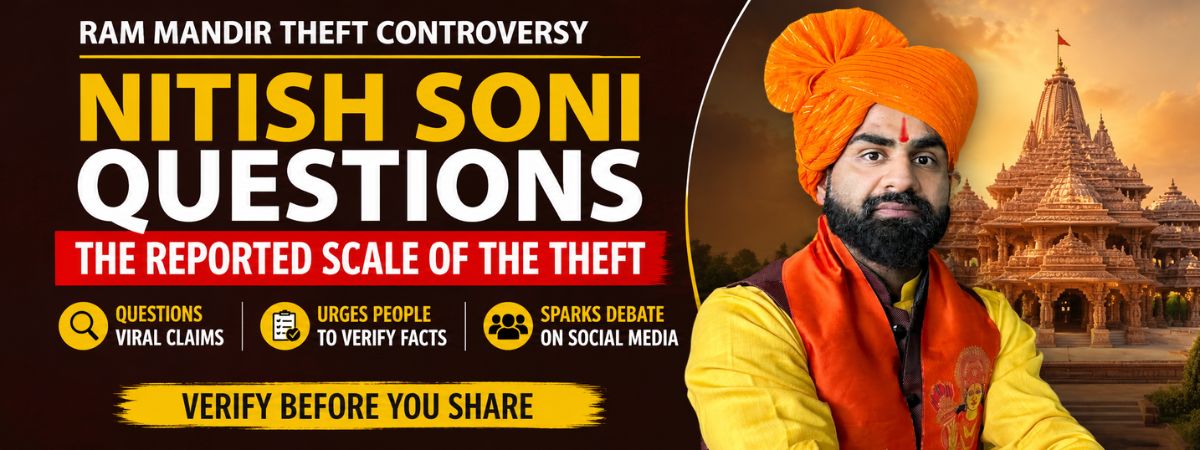
Meanwhile, Nitish Soni questioned the reported scale of the theft. He argued that some online claims might exaggerate the incident. Therefore, he advised people to verify the facts before sharing any viral content.
His response added a new perspective to the debate. As a result, many users discussed whether social media accurately represented the incident.
What Do Official Reports Say?
Authorities have started investigating the reported incident. However, officials have asked the public to avoid spreading unverified claims.
So far, officials have not confirmed many of the allegations circulating online. Meanwhile, investigators continue to collect evidence. They will release more information after completing the investigation.
Social Media Reacts
The controversy triggered thousands of reactions online. Some users believe Dhirendra Shastri raised an important concern about temple security. However, others argue that everyone should verify the facts before forming an opinion.
Furthermore, the debate shows how quickly information spreads on social media. Therefore, readers should always check trusted sources before sharing viral content.
Why Verifying Viral Claims Matters
Experts consistently recommend checking official government statements, police updates, and credible news reports. In addition, they warn that false information can spread quickly online. As a result, misinformation may create confusion and unnecessary panic.
Therefore, readers should separate verified facts from personal opinions. They should also avoid sharing unconfirmed claims.
Conclusion
Dhirendra Shastri’s remarks have sparked a nationwide discussion about the reported Ram Mandir theft. At the same time, Nitish Soni has encouraged people to examine the facts carefully. Overall, both viewpoints have increased public interest in the issue.
However, the investigation is still ongoing. Therefore, readers should follow official updates instead of relying only on edited videos or social media posts.
FAQs
What did Dhirendra Shastri say about the Ram Mandir theft?
Dhirendra Shastri commented on the reported Ram Mandir theft. Soon after, his remarks went viral and sparked widespread public discussion.
Who is Nitish Soni?
Nitish Soni is a public commentator. He questioned the reported scale of the theft and encouraged people to verify the facts before believing viral claims.
Has the Ram Mandir theft been officially confirmed?
Authorities are investigating the reported incident. However, they have not confirmed many of the claims circulating on social media.
Why is this topic trending?
The issue involves the Ram Mandir, a prominent religious site, and comments from Dhirendra Shastri. Therefore, it has attracted significant public attention and online discussion.
Should people trust viral videos without verification?
No. Viral videos often lack full context. Instead, readers should rely on official statements and credible news organizations before sharing or believing such content.