Understanding Dera Sacha Sauda Social Responsibility

Dera Sacha Sauda social responsibility, Ram Rahim teachings represent the connection between spiritual values and community service. The organization promotes the idea that spirituality is not limited to prayers or personal growth. Instead, it also includes helping people, supporting communities, protecting nature, and creating positive social change.

Over the years, Dera Sacha Sauda has been associated with various social welfare activities, including blood donation campaigns, health services, education programs, environmental drives, and disaster relief efforts. These initiatives involve volunteers who participate in activities designed to support people in need.

Moreover, the concept behind these activities is based on simple values such as compassion, kindness, honesty, and selfless service. According to the teachings followed by its followers, helping humanity is an important part of living a meaningful life.

For students, understanding these social responsibility efforts provides an opportunity to learn how values can transform into practical actions. Small acts of kindness, when organized properly, can create a wider impact on society.


What Is Dera Sacha Sauda Social Responsibility?
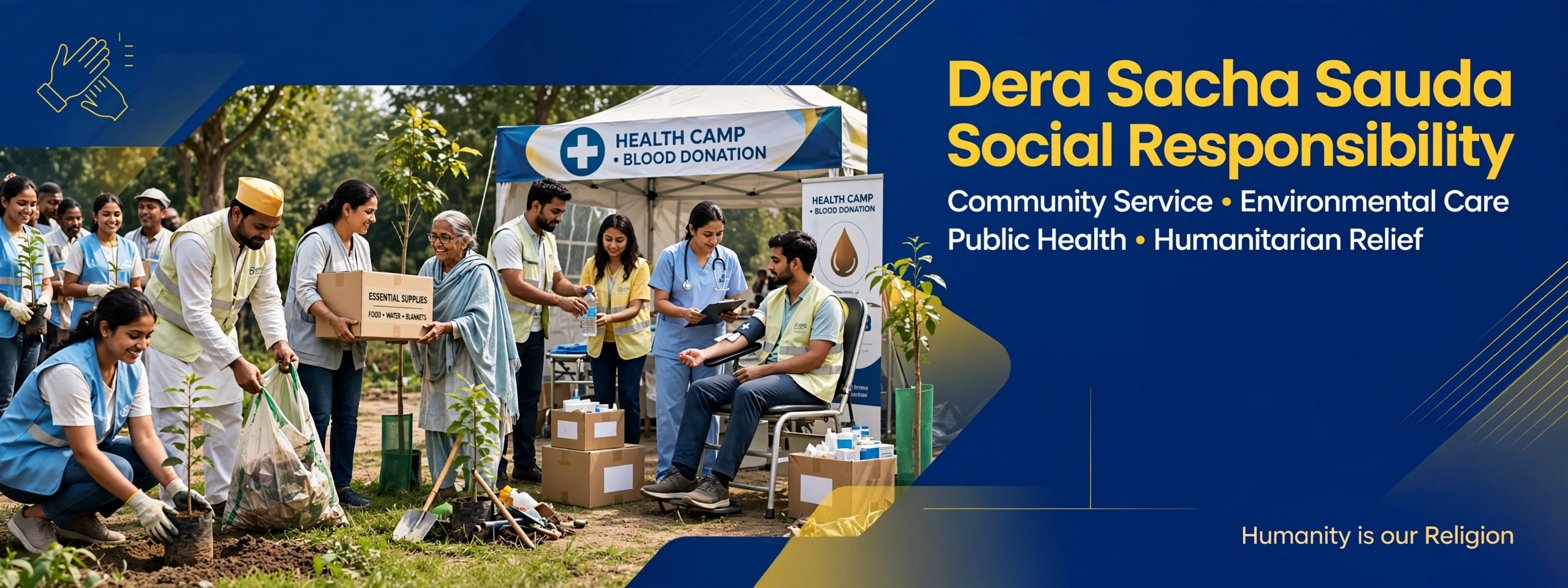
Dera Sacha Sauda volunteers participating in social responsibility activities including health camp, blood donation, tree plantation and cleanliness drive representing humanitarian service
Dera Sacha Sauda volunteers engaged in community welfare initiatives – from health camps and blood donation to environmental conservation and distribution of essential supplies. Humanity is our Religion.

Dera Sacha Sauda social responsibility refers to welfare activities carried out to support communities and address social challenges. The main idea is to combine spiritual learning with practical service.

Furthermore, these activities focus on different areas where people need support, such as healthcare, education, environment protection, and emergency assistance.

Key Objectives of Social Responsibility

The major objectives include:

1. Serving Humanity Without Discrimination

One important principle behind social service is helping people regardless of their background, religion, caste, or social status.

2. Supporting Healthcare Initiatives

Health camps, medical assistance, and blood donation activities aim to provide support to people who require medical help.

3. Promoting Education and Skills

Education programs and skill development activities help young people improve their knowledge and career opportunities.

4. Protecting the Environment

Environmental activities such as tree plantation and cleanliness campaigns encourage people to take care of nature.

5. Helping During Emergencies

During floods, storms, or other difficult situations, volunteers often participate in relief activities to support affected communities.

Therefore, social responsibility is not only about providing immediate help. It is also about creating awareness and encouraging people to contribute to society.


Core Values Behind Dera Sacha Sauda Welfare Activities

The foundation of social service activities is based on several important values. These values guide volunteers and encourage them to work for community welfare.

Compassion

Compassion means understanding the difficulties of others and trying to provide support. For example, helping someone with food, medicine, or basic needs reflects concern for humanity.

Selfless Service

Service without expecting personal benefits is considered an important value. Volunteers contribute their time and energy to support different social causes.

Unity and Respect

Moreover, respecting people from different communities creates harmony. Social service activities often bring people together for a common purpose.

Cleanliness and Environmental Care

Clean surroundings and a healthy environment improve quality of life. Therefore, cleanliness campaigns and plantation drives encourage responsible habits.

Education and Awareness

Education plays a major role in improving society. Through learning opportunities and awareness programs, people can develop better skills and make informed decisions.


History of Dera Sacha Sauda Social Welfare Work

Early Beginning and Spiritual Foundation

Dera Sacha Sauda began as a spiritual organization focused on moral teachings and personal development. Initially, its activities were centered around spiritual guidance and community gatherings.

However, as the organization expanded, social welfare activities became an important part of its work. Gradually, more volunteers became involved in different service initiatives.

Growth of Community Service Activities

Over time, the organization started participating in various welfare programs. These included blood donation campaigns, health support activities, education-related initiatives, and environmental campaigns.

Furthermore, the increasing participation of volunteers helped expand these programs to different communities.

Development of Large-Scale Initiatives

As the network of followers and volunteers grew, larger social campaigns were organized. These activities required planning, teamwork, and coordination.

For example, blood donation drives required volunteer management, medical support, and proper arrangements. Similarly, disaster relief work required quick response and organized resources.


Important Milestones in Social Welfare Activities

Some key areas associated with these initiatives include:

Additionally, these activities demonstrate how organized community participation can help address social challenges.


Saint Dr. Gurmeet Ram Rahim Singh Ji Insan and Welfare Initiatives

Saint Dr. Gurmeet Ram Rahim Singh Ji Insan is a central figure associated with recent activities of Dera Sacha Sauda. Followers recognize his role in encouraging participation in various social welfare campaigns.

Under his leadership, followers have participated in activities related to healthcare, environmental protection, education support, and community assistance.

Areas of Welfare Work Associated With His Leadership

Blood Donation Campaigns

Blood donation drives have been among the widely recognized social activities connected with the organization. These campaigns encourage volunteers to donate blood and support patients who require transfusions.

Environmental Campaigns

Furthermore, plantation drives and cleanliness activities encourage communities to protect natural resources and maintain cleaner surroundings.

Healthcare Support

Medical camps and healthcare assistance programs aim to provide basic support and awareness to people.

Education and Skill Development

Education-related initiatives focus on helping students improve their learning opportunities and develop useful skills.
Major Social Programs and Activities by Dera Sacha Sauda

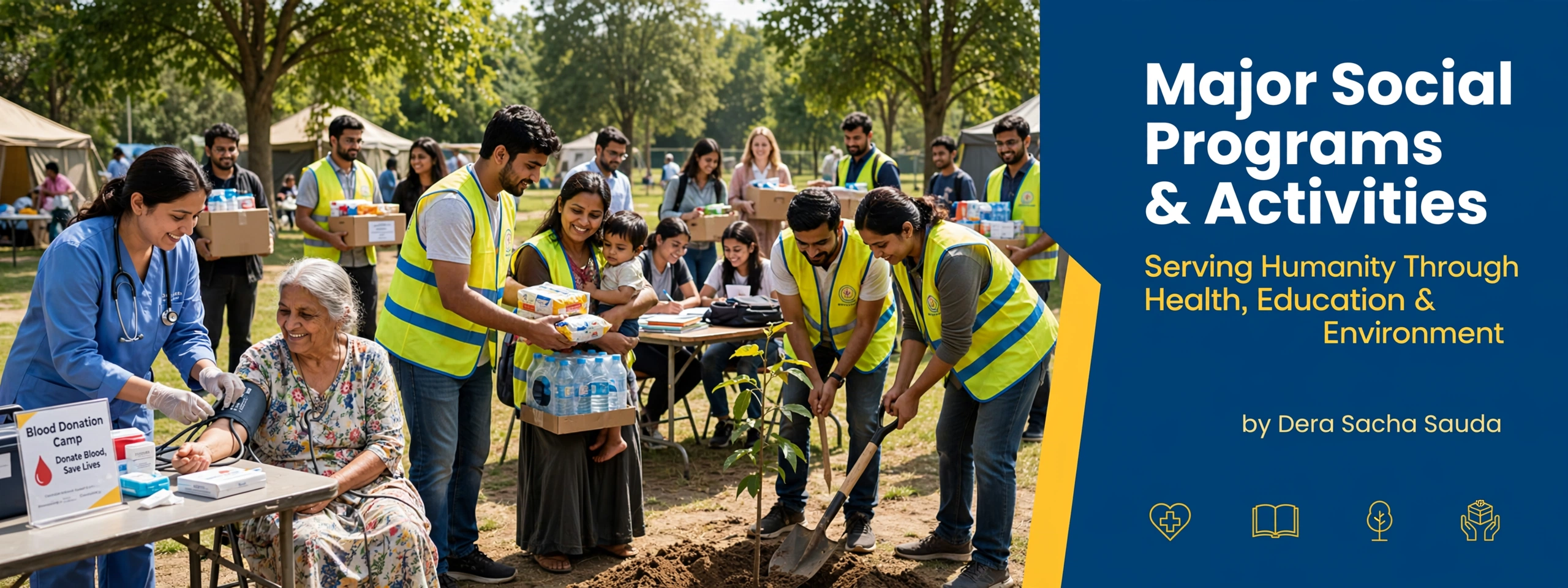
Dera Sacha Sauda volunteers serving humanity through health camp, blood donation, education support, tree plantation and relief distribution activities
Major Social Programs & Activities by Dera Sacha Sauda – Volunteers serving humanity through health checkups, blood donation camps, education support, tree plantation, and emergency relief distribution.

Dera Sacha Sauda social responsibility includes different welfare programs that focus on improving the lives of people. These initiatives combine volunteer efforts, planning, and community participation.

Furthermore, these programs cover important areas such as healthcare, education, environmental protection, and emergency support.

Blood Donation Campaigns

Blood donation is one of the major social activities associated with Dera Sacha Sauda volunteers.

Through organized blood donation camps, volunteers contribute blood that can help patients during medical emergencies. These camps usually require coordination between volunteers and healthcare professionals to maintain proper safety procedures.

Moreover, blood donation awareness programs encourage people to understand the importance of regular blood donation.

Benefits of Blood Donation Activities:

  • Helps patients who need blood during emergencies.
  • Creates awareness about healthcare responsibility.
  • Encourages young people to participate in social service.
  • Builds a culture of helping others.

Therefore, blood donation represents how a simple action can create a meaningful impact on human lives.


Healthcare and Medical Support Programs

Healthcare support is another important area of community service.

Medical camps provide basic health check-ups, health awareness, and medical guidance to people who may have limited access to healthcare facilities.

Additionally, some welfare initiatives include ambulance support and emergency assistance during difficult situations.

How Healthcare Programs Help Communities:

  • Provide early detection of health problems.
  • Create awareness about hygiene and preventive care.
  • Support people who need medical guidance.
  • Encourage healthy lifestyle practices.

As a result, healthcare programs can improve awareness and accessibility for many communities.


Education and Skill Development Programs

Education plays a major role in building a stronger society. Dera Sacha Sauda-related welfare activities also focus on learning opportunities and skill development.

Education support helps students improve their knowledge, while skill training can prepare young people for better career opportunities.

Education Initiatives Include:

  • Learning support for students.
  • Skill development activities.
  • Career awareness programs.
  • Training opportunities for youth.

Furthermore, education does not only provide information. It also helps individuals become confident and independent.


Women Empowerment Activities

Women empowerment focuses on creating opportunities for women to become financially and socially stronger.

Through awareness programs, skill training, and support activities, women can develop confidence and improve their participation in society.

Moreover, empowering women contributes to better families and stronger communities.


Environmental Protection Initiatives

Environmental responsibility is another important part of social welfare activities.

Tree plantation campaigns, cleanliness drives, and awareness programs encourage people to protect nature.

Environmental Activities Include:

  • Planting trees in public areas.
  • Promoting cleanliness habits.
  • Creating awareness about pollution.
  • Encouraging water and natural resource conservation.

Similarly, students can learn that protecting the environment is a shared responsibility.


Disaster Relief and Emergency Support

During natural disasters and emergencies, organized volunteer groups can provide immediate assistance.

Relief activities may include food distribution, basic supplies, and support for affected families.

For example, during difficult situations, volunteers can help communities recover by providing essential resources.

Therefore, disaster relief demonstrates the importance of quick planning, teamwork, and compassion.


How These Programs Create Social Impact

Social service activities can create changes in different areas of society.

Saving Lives

Healthcare support and blood donation activities directly help people during critical situations.

Supporting Education

Education programs help students develop knowledge and skills for the future.

Improving Communities

Environmental and cleanliness campaigns create healthier surroundings.

Encouraging Volunteerism

Moreover, these activities inspire people to contribute their time and abilities for social causes.

Small actions, when combined with teamwork, can create larger positive results.


Comparison: Dera Sacha Sauda Model and Other Social Organizations

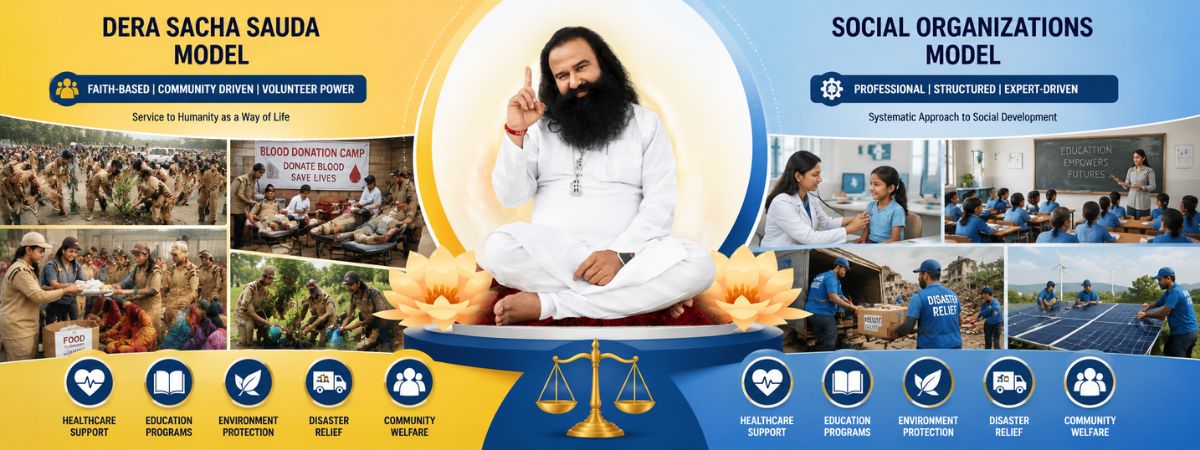
Comparison banner showing the Dera Sacha Sauda community service model alongside professional social organizations, with a central spiritual leader image and visual highlights of healthcare, education, environmental protection, disaster relief, and community welfare.
A visual comparison of the Dera Sacha Sauda community service model and professional social organizations, illustrating different approaches to humanitarian work, education, healthcare, environmental conservation, disaster relief, and community development.

Social organizations around the world work in different ways. Some focus on specific areas, while others provide multiple services.

Comparing different models helps students understand how social responsibility works.


Mission and Purpose

Many NGOs usually focus on specific areas such as education, healthcare, poverty reduction, or environmental protection.

However, faith-based organizations often combine spiritual values with multiple social activities.

Similarly, both models aim to improve society through organized efforts.


Volunteer Participation

Dera Sacha Sauda activities involve large volunteer networks motivated by service and community values.

On the other hand, many NGOs depend on professional teams, employees, and volunteers working together.

Therefore, both approaches can contribute to solving social problems.


Resources and Management

Faith-based groups may have strong community connections that help mobilize volunteers quickly.

Meanwhile, professional NGOs often use structured systems, research, and specialized knowledge.

Moreover, transparency, proper planning, and accountability are important for every organization.


Strengths of Faith-Based Social Service Models

Faith-based organizations can provide several advantages:

Quick Community Response

Large volunteer networks can respond quickly during emergencies.

Strong Community Connection

People often participate because of shared values and beliefs.

Long-Term Volunteer Engagement

Regular participation can create dedicated volunteers who continue supporting social causes.


Challenges and Areas of Improvement

Every social organization faces challenges. Therefore, proper systems are necessary for long-term success.

Maintaining Transparency

Organizations need clear records of activities, resources, and funds.

Professional Management

Large programs require trained teams, planning, and effective coordination.

Sustainable Development

Long-term projects need continuous support and proper monitoring.

Furthermore, combining volunteer passion with professional management can improve social service outcomes.


Education, Environment, and Health: Three Important Pillars

Dera Sacha Sauda social responsibility can be understood through three major areas: education, environment, and health.


Education: Building Future Generations

Education helps people gain knowledge and confidence.

Important lessons include:

  • Learning improves opportunities.
  • Skills help students prepare for careers.
  • Awareness creates responsible citizens.

Additionally, supporting education creates long-term benefits for society.


Environment: Protecting Nature

Environmental care helps maintain a healthy planet.

Important activities include:

  • Tree plantation.
  • Cleanliness campaigns.
  • Awareness about pollution control.

As a result, environmental responsibility becomes a habit that benefits future generations.


Health: Creating Awareness and Support

Healthy communities require proper awareness and support.

Health-related activities encourage:

  • Regular check-ups.
  • Clean living habits.
  • Medical awareness.

Therefore, healthcare is an essential part of social development.


Real Examples of Community Service

Example 1: Blood Donation Awareness

A community organizes a blood donation camp where volunteers participate. The donated blood can support patients who require emergency treatment.

This example shows how individual efforts can create a life-saving impact.


Example 2: Education Support

A student receives learning support through educational programs and improves academic performance.

Later, better education opportunities help the student build a stronger future.


Example 3: Environmental Campaign

Students and volunteers participate in a plantation drive near a school.

Over time, these trees improve the surroundings and teach children the importance of nature conservation.


How Young Students Can Participate in Social Responsibility

Students do not need large resources to create positive change.

Even small actions can contribute to society.

Ways Students Can Help:

  • Participate in cleanliness campaigns.
  • Plant trees and protect nature.
  • Help classmates with studies.
  • Spread awareness about health and hygiene.
  • Support food donation activities.

Moreover, students can develop leadership skills by participating in community activities.


Simple Daily Habits for Responsible Living

Young people can practice social responsibility through everyday actions.

Examples include:

  • Keeping surroundings clean.
  • Respecting others.
  • Saving water and electricity.
  • Helping people in need.
  • Sharing knowledge with others.

Therefore, social responsibility begins with small personal choices.


Ethics and Responsibility in Social Service

Social work requires honesty, fairness, and responsibility.

Important ethical principles include:

Honesty

Organizations should maintain transparency in their activities.

Equality

Everyone should receive support without discrimination.

Reliability

Volunteers should complete responsibilities sincerely.

Respect for Rules

Social activities should follow legal and safety guidelines.

Furthermore, ethical practices build trust between organizations and communities.


Frequently Asked Questions (FAQs)

What is Dera Sacha Sauda social responsibility?

Dera Sacha Sauda social responsibility refers to welfare activities focused on helping communities through healthcare, education, environment, and humanitarian support.

How do Ram Rahim teachings connect with social service?

The teachings followed by followers emphasize helping others, kindness, and community welfare.

Can students participate in social activities?

Yes, students can participate through cleanliness drives, awareness programs, environmental activities, and helping others.

Why is blood donation important?

Blood donation helps patients who need blood during medical treatments and emergencies.

How does education help society?

Education improves knowledge, skills, confidence, and future opportunities.

Why is environmental protection important?

Protecting nature helps create healthier surroundings for current and future generations.


Final Conclusion: Learning From Dera Sacha Sauda Social Responsibility

In conclusion, Dera Sacha Sauda social responsibility, Ram Rahim teachings highlight the connection between values and practical service. Through activities related to healthcare, education, environmental protection, blood donation, and disaster support, social responsibility becomes a visible action.

Furthermore, these initiatives show students that helping others does not always require large resources. Small contributions, when combined with teamwork and dedication, can create meaningful results.

Ultimately, the biggest lesson is that compassion, responsibility, and cooperation can help build stronger communities. Whether through volunteering, protecting nature, or supporting education, every person can contribute towards positive social change.

Leave a Reply

Your email address will not be published. Required fields are marked *