The rescue effort, which took 24 hours and extended into the next dawn, ended as Ambala feared it would. Four-year-old Nirvair Singh fell into a 220-foot-deep open borewell in Dhanaura village, Haryana. Rescue teams pulled him out just before 3:40 a.m. on Wednesday. However, doctors at Civil Hospital in Ambala Cantonment could not revive him.
Quick answer: Four-year-old Nirvair Singh fell into an abandoned 220-foot borewell in Dhanaura village, Ambala, on Tuesday morning. The Army, NDRF, SDRF, and district administration carried out a 21-hour rescue operation. Doctors declared the child dead after he arrived at the hospital.
What Happened in Ambala?
The incident took place at around 6:30 am on Tuesday in Dhanaura village. Nirvair went to the family’s fields with his father, Manjit Singh, to bring breakfast for his grandfather, Karnail Singh. His grandfather had reached the fields earlier that morning. Manjit soon became busy with work, while Karnail sat down to eat. Meanwhile, Nirvair wandered off to play near an open borewell in a neighbouring field. He started throwing soil into the borewell. As he leaned forward to look inside, the rain-softened ground beneath him suddenly collapsed. The boy fell into the open borewell.
According to his father, the family heard a loud noise and rushed towards the borewell. Other family members quickly followed. They first tried to speak to Nirvair and rescue him themselves. After about an hour, they called the emergency services when their efforts failed. Village sarpanch Kaptan Singh later shared another heartbreaking detail. Nirvair had returned from his grandparents’ house on Sunday morning after spending several days there. He had recently started the new nursery school term.
How the 21-Hour Rescue Operation Unfolded
Emergency Teams Rushed to the Spot
Deputy Commissioner Ajay Singh Tomar and other district officials rushed to Dhanaura soon after learning about the incident. They quickly stepped up the rescue operation and coordinated efforts with emergency teams. NDRF and SDRF teams marched alongside Army men working through daylight hours and overnight within the district administration’s guidance. Haryana Cabinet Minister Anil Vij visited the spot Tuesday evening to review the progress of the operation and met with the family.
Challenges Faced During the Rescue
Underneath, running 220 feet down, was lined up against the rescuers from the outset. Rescue teams dug a parallel pit beside the borewell to reach the child safely. They made the pit wide enough to prevent a collapse during the operation. The teams also lowered oxygen pipes and cameras into the borewell to monitor Nirvair’s condition. Intermittent rain continued throughout the day. The wet ground slowed the digging and made the rescue operation even more difficult.
Child Declared Dead After Rescue
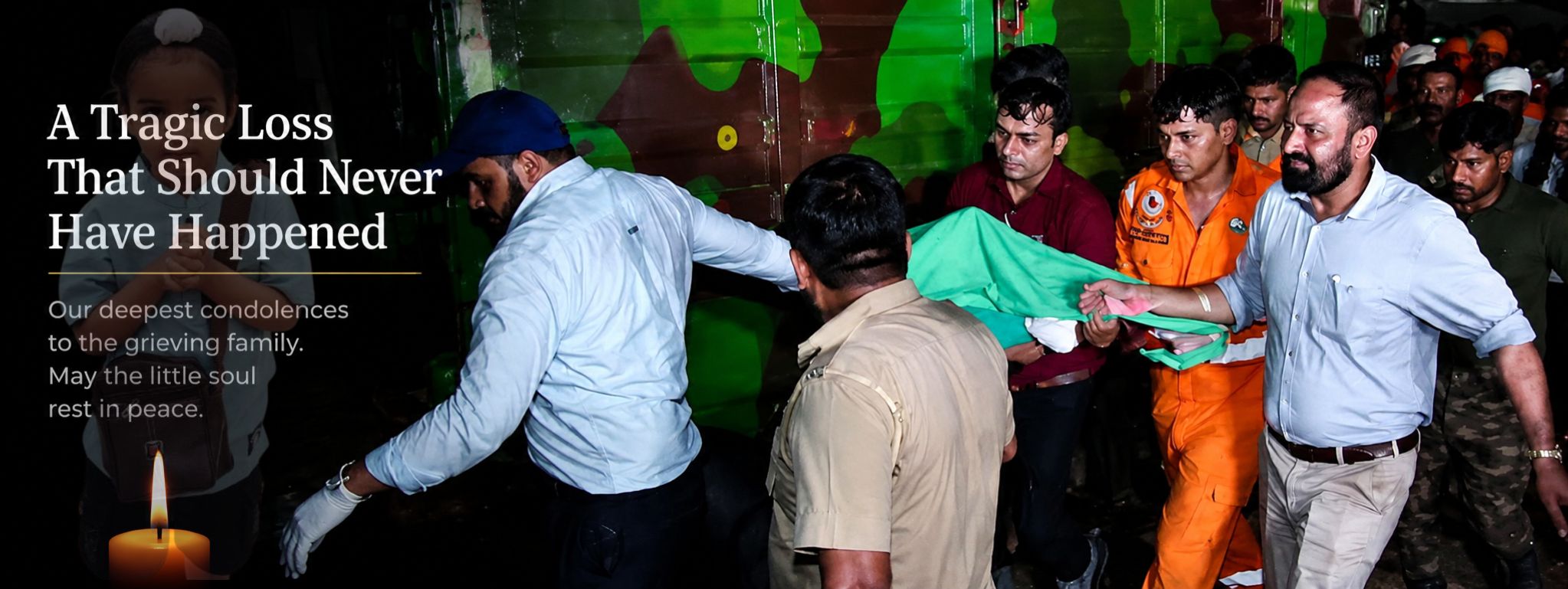
Nirvair was eventually extracted around 3:40 am Wednesday, nearly 21 hours after he had first fallen in. He was taken to the Civil Hospital in Ambala Cantonment via ambulance, and was attended to by doctors on arrival. He was brought dead, and there were no signs of life, a hospital doctor confirmed. Since the body inside the borewell was found in water, the hospital has preserved it for a post-mortem examination to find out the exact cause of death.
For a family that had been holding onto hope through an entire day and night, the news arriving just before sunrise made it that much harder to absorb.
Why Borewell Accidents Keep Happening in India
Abandoned Borewells Remain a Major Hazard
That rarely happens in cases like this, but it’s not just bad luck. Many landowners leave dry or unused borewells open instead of sealing them properly. As a result, these abandoned borewells continue to endanger children across rural India. Following the incident, the Deputy Commissioner ordered the police to file criminal charges against the person responsible for leaving the borewell open. He also urged nearby farmers to cover or permanently seal every dry or abandoned borewell on their land.
Previous Similar Incidents
Nirvair’s death has revived memories of the 2006 rescue of five-year-old Prince in Haryana’s Kurukshetra district. Rescue teams saved Prince after he remained trapped nearly 48 hours inside a borewell. The incident brought nationwide attention to borewell safety. More recently, rescue teams saved a four-year-old boy from a newly dug borewell in Punjab’s Hoshiarpur district after a nine-hour operation. These incidents show that rescue outcomes often depend on the borewell’s depth, water level, and how quickly emergency teams reach the site.
Supreme Court and Government Guidelines on Borewells
Supreme Court Safety Guidelines
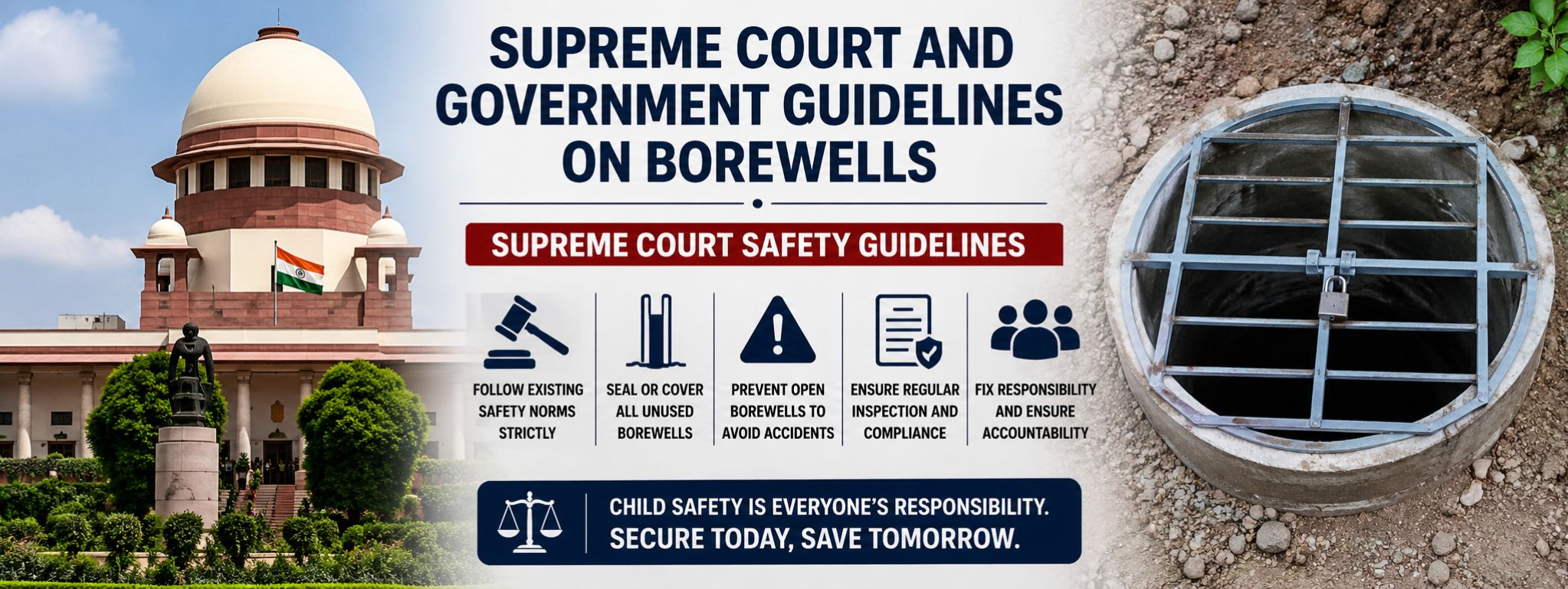
The Supreme Court introduced borewell safety guidelines in 2010 to prevent children from falling into abandoned wells. The Court directed landowners to inform local authorities at least 15 days before drilling a new borewell. It also required every drilling agency, whether private or government-operated, to register with the district administration. During drilling, operators must install warning signboards and protective fencing around the site.
Rules for Sealing Abandoned Borewells
Once a borewell becomes unusable, the rules require the owner to fill it from the bottom with clay, sand, or similar material before sealing it permanently. The responsible groundwater authority must verify the sealing process. District Collectors must monitor compliance and can take legal action under the Criminal Procedure Code against anyone who leaves a borewell open.
Why Enforcement Remains a Challenge
Although the legal framework is comprehensive, authorities have struggled to enforce these rules consistently. The Ministry of Jal Shakti has repeatedly urged states to strengthen monitoring and ensure timely compliance. Despite these efforts, incidents like the Ambala borewell tragedy continue to occur because many abandoned borewells remain uncovered or improperly sealed.
Public Reaction and Social Media Response
The child’s death quickly made headlines across local and national media. People expressed sympathy for the grieving family on social media. Many also questioned why authorities still allow open borewells to put children at risk, despite the Supreme Court issuing safety guidelines 16 years ago. The tragedy once again exposed gaps in enforcing the existing safety rules on the ground.
Can Such Tragedies Be Prevented?
Safety measures worth pushing for:
- Mandatory sealing of every abandoned or dry borewell, with verification by local authorities
- Regular, unannounced inspections in rural and semi-rural areas, not just after an accident makes headlines
- Real penalties for landowners and drilling agencies who leave wells uncovered
- Grassroots awareness campaigns, run through panchayats and schools, aimed at parents and children alike
Frequently Asked Questions
Who was the child in the Ambala borewell tragedy?
Nirvair Singh, a four-year-old boy from Dhaneora village in Ambala, Haryana.
How deep was the borewell?
Around 220 feet deep and about nine inches wide.
How long did the rescue operation last?
Close to 21 hours, from Tuesday morning to early Wednesday.
Which agencies participated in the rescue?
The Army, NDRF, SDRF, police, and the district administration, coordinated by Deputy Commissioner Ajay Singh Tomar.
Why do borewell accidents continue to occur?
Landowners fail to seal many abandoned or uncovered borewells, despite the Supreme Court issuing safety guidelines in 2010. As a result, such borewells continue to cause most accidents.
Conclusion
Nirvair Singh’s death once again exposes the risks posed by abandoned borewells across India. Rescue teams from the Army, NDRF, SDRF, and the local administration worked for more than 21 hours in Ambala. Despite their determined efforts, they could not save the four-year-old boy. The tragedy raises a familiar question. Will authorities finally enforce the existing rules for sealing abandoned borewells, or will another open borewell claim another child’s life?