India’s internet throws up a viral trend practically every week. Most disappear within two days — people laugh, generate memes, and then simply move on. But the “Cockroach Janta Party” trend felt strangely different from the start.
My first encounter with it was completely accidental — around 1 AM, scrolling Instagram reels instead of sleeping (which honestly explains half of India’s meme culture at this point). Suddenly, every second reel had cockroach edits, fake political speeches, chaotic slogans, and people flooding the comments with:
“Main bhi cockroach.”
At first, it seemed like just another brain-rot meme cycle — one of those random internet jokes people forget within a week. However, after spending time reading comment sections, the mood shifted. This felt less like “just memes” and more like frustrated humour from young people who are genuinely exhausted.
And perhaps that’s precisely why it exploded so fast. Edits were being shared across Instagram, meme pages on Facebook, and discussion threads on X (formerly Twitter) almost nonstop. The trend spread because it blended absurd humour with something deeply relatable — survival, frustration, and internet chaos all packed into one meme movement.
The Cockroach Janta Party — widely known online as CJP — is essentially a satirical internet movement built almost entirely through meme culture. There are no polished press conferences, no career politicians, and no giant campaign rallies. Instead, the movement runs entirely on meme edits, sarcastic captions, low-quality fake campaign posters, Instagram reels, AI-generated speeches, and extremely online humour.
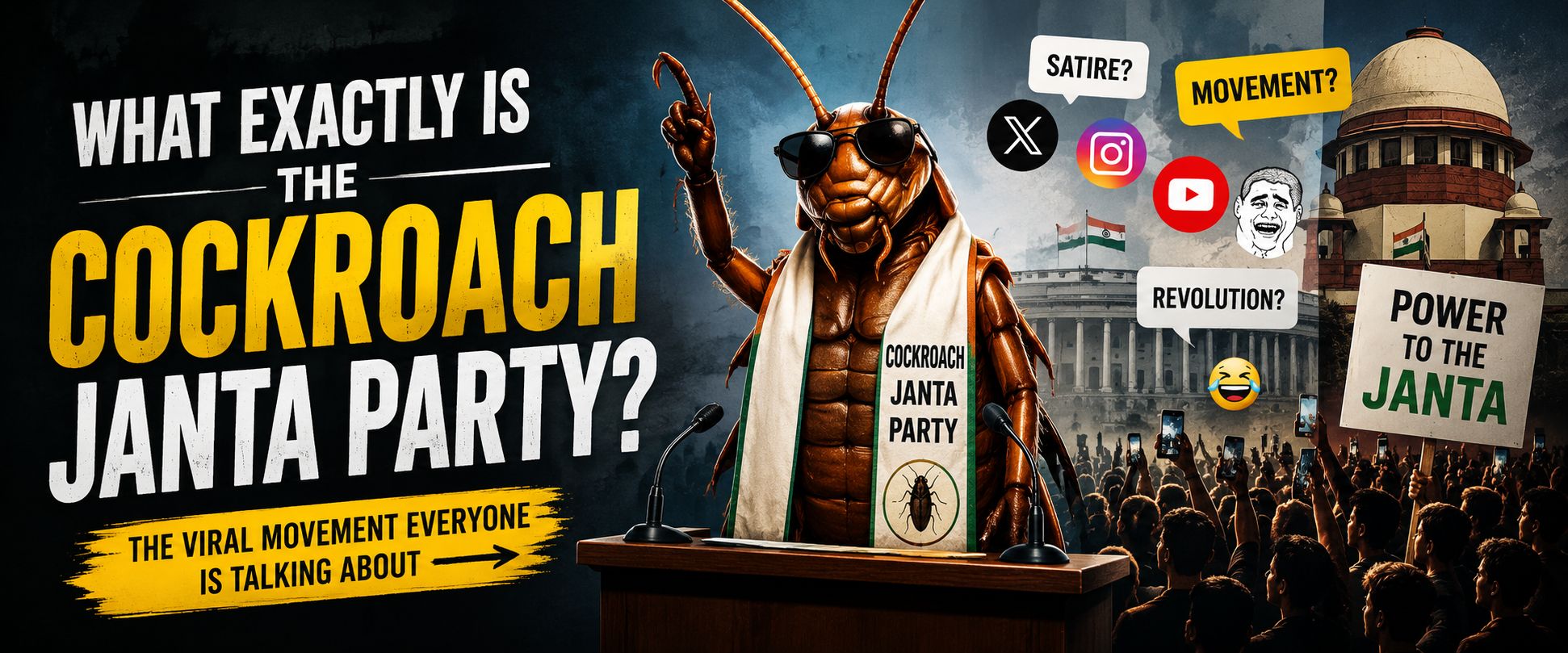
Interestingly, the movement barely even tried to look professional — and somehow, that made it feel far more relatable. Most young Indians are already juggling exam pressure, unstable careers, layoffs, unemployment, burnout, towering family expectations, and the nagging feeling that everyone else is doing better on social media.
So when people encountered slogans like “Voice of the Lazy and Unemployed” or “Internet Ki Asli Opposition,” they laughed — but not entirely as a joke. That’s the peculiar thing about Gen Z humour today: half the meme is comedy, and the other half is emotional damage.
Nobody seems entirely certain about the origin. Some trace it to meme pages on Instagram, while others believe small creators on X pushed it first. One friend was convinced it started on Reddit — though he says that about virtually every internet trend.
Early posts were completely absurd: random cockroach edits, fake political campaigns, AI voiceovers, chaotic background music, and terrible green-screen effects. Honestly, some of the reels looked intentionally terrible. Yet internet culture works in mysterious ways. Polished content often dies instantly, while a badly edited meme can somehow ignite a nationwide conversation.
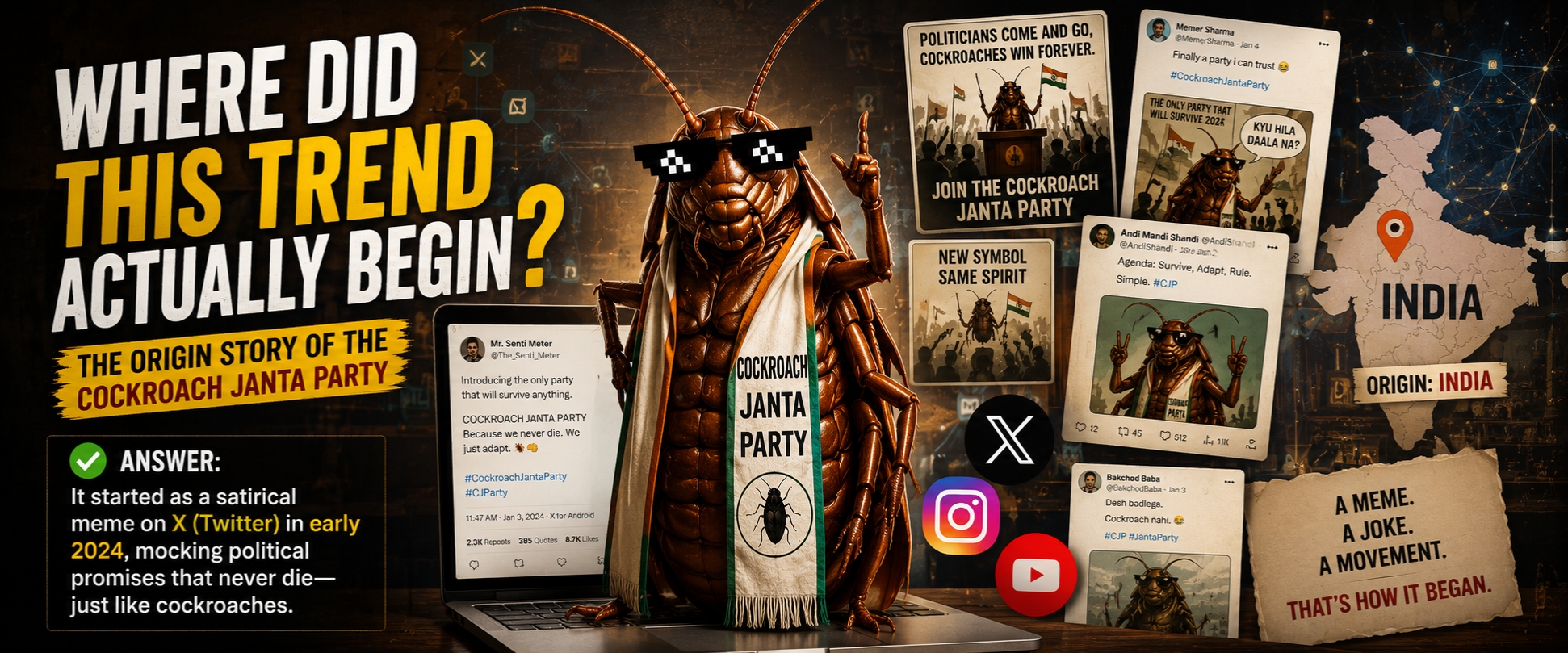
Over time, the cockroach itself became symbolic. Online, people joked that cockroaches survive everything — heat, pressure, disasters, toxic environments, and seemingly impossible situations. Weirdly, a lot of young people found themselves relating to that survival mentality. Funny? Absolutely. Slightly depressing? Also yes.
Things escalated sharply when online discussions linked the movement to remarks attributed to the Chief Justice of India that were circulating widely across social media. Within hours, meme pages began reacting, reels exploded in reach, X threads appeared everywhere, and users started transforming serious topics into satirical edits — classic Indian internet behaviour, as expected.
Many unemployed students interpreted the remarks emotionally, because job pressure is already an intensely sensitive issue right now. Competitive exams are brutal, the hiring landscape feels unpredictable, and countless graduates already carry a deep sense of frustration.
Chief Justice Kant reportedly clarified that his original observation was aimed at fake degree holders entering professions such as law and media, not unemployed youth in general. By then, however, social media had already done what it always does: take one emotionally charged topic and multiply it by ten million views.
Algorithms are built to amplify outrage, humour, frustration, and identity-based content. This trend happened to carry all four, which is why it spread with such relentless speed.
This is probably the most important reason the movement resonated so deeply. Most political messaging online feels robotic these days — every statement sounds PR-trained, every speech feels rehearsed. By contrast, Cockroach Janta Party sounded exactly like how actual people talk in group chats: messy, sarcastic, self-aware, and chronically online.
Some reels barely made logical sense, yet they clicked emotionally. Comment sections were filled with people casually joking about failing exams, toxic office culture, salary pressure, loneliness, the feeling of being “behind” in life, and being exhausted before even turning 25.
Nobody was writing emotional essays about their struggles. Instead, they were posting memes — and that’s precisely how a lot of people cope online today. Not through serious debates, but through humour wrapped in familiar chaos.
Without Instagram reels, this trend would likely have remained a niche curiosity. The format was practically tailor-made for the algorithm: short videos, emotionally relatable captions, comment bait, chaotic humour, and repost-friendly edits. One creator uploads a reel, then meme pages repost it, then reaction accounts pile on, and before long, your cousin who normally only shares cricket content is suddenly posting “Main Bhi Cockroach.”
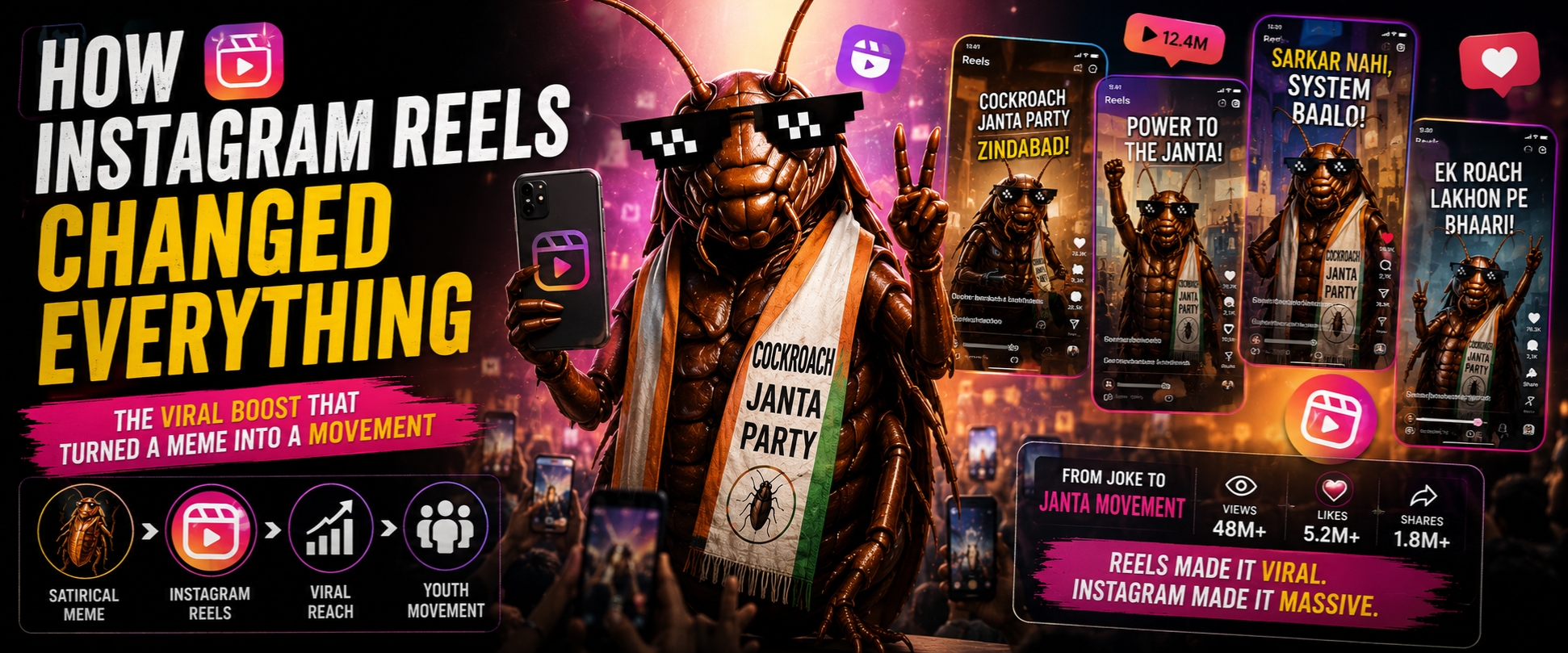
That’s essentially how internet movements spread today — not through TV channels or newspapers, but through recommendation algorithms. It’s both impressive and, at times, slightly terrifying to watch in real time.
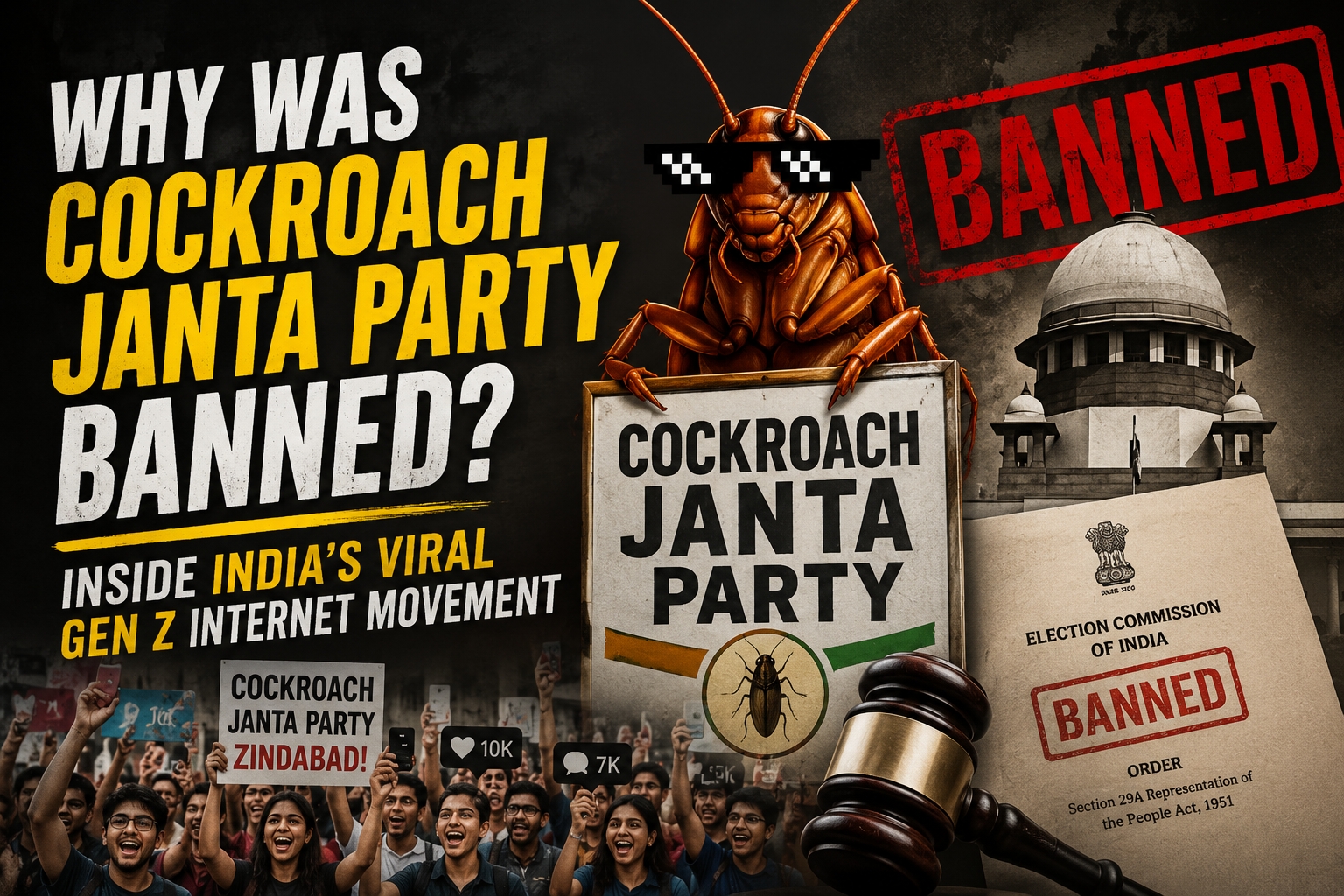
The most significant controversy erupted when reports emerged that the Cockroach Janta Party account on X had been withheld in India. Ironically, that decision probably amplified the movement far more than anything else could have. The internet reacts to bans the same way children react when told not to touch something: with instant, overwhelming curiosity.
Suddenly, everyone was debating censorship, free speech, political satire, meme activism, and platform moderation. Some argued that meme-based political humour shouldn’t be treated as a serious threat. Others maintained that internet meme movements now shape public opinion faster than mainstream media ever could. Meanwhile, both sides kept arguing online while the memes continued spreading regardless, which is honestly peak internet culture.
The slogan sounds ridiculous at first glance. After encountering it repeatedly, though, the deeper resonance becomes clear. For many users, those three words symbolised surviving stress, navigating unstable jobs, pushing through burnout, and coping with the pressure to succeed on a timeline that feels increasingly unrealistic.
Rather than openly saying “I’m mentally exhausted,” people simply posted “Main bhi cockroach.” That thin layer of humour made it easier to express difficult emotions in a public space. Older generations sometimes underestimate this dimension of internet culture — memes are no longer just jokes. In many cases, they’re emotional coping mechanisms with background music.
For now, most observers still regard Cockroach Janta Party as a satirical digital phenomenon rather than a formally organised political force. Nevertheless, it reflects something significant about modern internet audiences. Young users respond far more readily to authenticity, humour, emotional honesty, relatable frustration, and creator-style communication than they do to polished, scripted speeches.
Regardless of whether one supports the movement, it is clearly understood that one fundamental truth about the internet is that attention is the real currency. Furthermore, this movement captured attention with remarkable efficiency.
Perhaps this trend will fade in a few months — internet culture moves extraordinarily fast, after all. Even so, the popularity of Cockroach Janta Party says something larger about India’s online generation. Young people are tired of overly formal conversations and robotic messaging. They want content that feels genuinely human — even if it’s messy, sarcastic, chaotic, or emotionally unstable at times.
Somehow, a bizarre cockroach meme movement managed to capture that feeling more effectively than many serious political campaigns. Which says quite a lot about the internet in 2026 — and perhaps about society itself.
Why was the Cockroach Janta Party banned?
Reports suggest the Cockroach Janta Party X account was withheld in India due to legal or platform-related action. The precise reason has not been fully clarified publicly.
Who started the Cockroach Janta Party?
The movement was founded by Abhijeet Dipke, who became widely recognised online as the creator of this viral satirical movement.
Why did Cockroach Janta Party go viral on Instagram?
The movement went viral because it blended meme culture, youth frustration, satire, and relatable humour in a format perfectly suited to Instagram reels and algorithm-driven content discovery.
What does “Main Bhi Cockroach” mean?
“Main Bhi Cockroach” became a widely used sarcastic internet slogan among young users expressing frustration with unemployment, mounting pressure, and feeling overlooked in mainstream conversations.
Is Cockroach Janta Party a real political party?
At present, it is broadly understood as a satirical digital movement and internet political campaign, rather than a formally established mainstream political party.