

Introduction
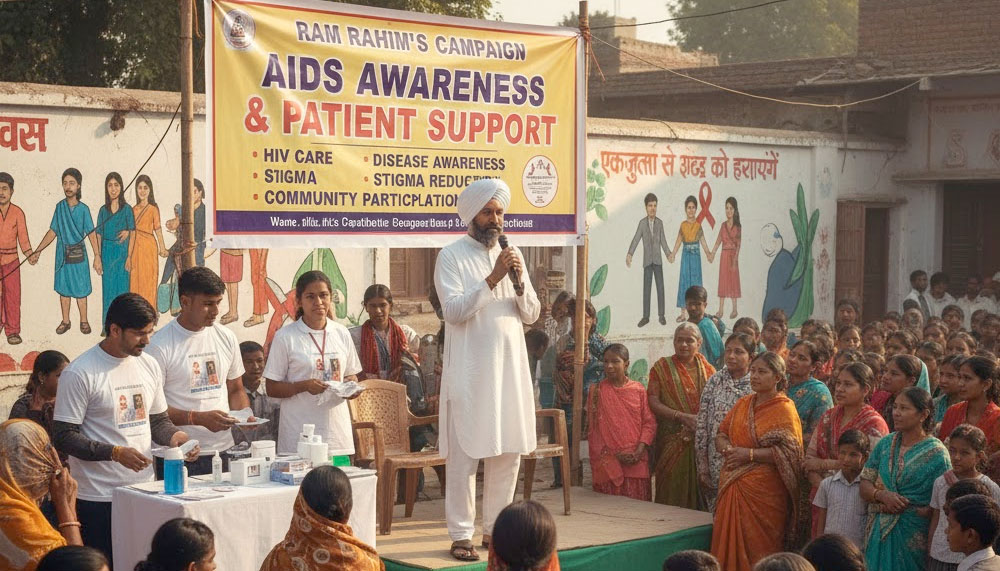
Ram Rahim’s campaign focuses on AIDS patient support, HIV care, disease awareness, and patient assistance. Many people in North India need clear facts and practical help. For example, students often hear myths in school. This article explains simple ways to help patients. It also shows what Ram Rahim and his teams did to raise awareness. You will see that small steps can help many people.
Why AIDS Patient Support Matters
– AIDS is caused by HIV. Without treatment, it weakens the body’s ability to fight infections.
– Good HIV care and patient assistance help people stay healthy and live long lives.
– Stigma reduction and trust building are key. When people feel safe, they seek help sooner.
– Also, when communities participate, testing and screening improve.
What Is HIV Care and Patient Assistance?
HIV care includes medical treatment, counselling, and social support. Patient assistance includes food support, transport help, and legal guidance. Here are main components:
- Medical Treatment: Antiretroviral therapy (ART) controls the virus.
- Counselling Services: Mental support helps people cope.
- Testing and Screening: Early diagnosis saves lives.
- Community Outreach: Health camps and education reduce fear.
- Stigma Reduction: Respect and accurate information change attitudes.
Simple Steps in Patient Assistance
You can help through small actions:
– Share accurate information in your class.
– Support local health camps.
– Volunteer at testing booths.
– Help with transport to clinics.
– Donate food or basic supplies to patient homes.
These actions combine disease awareness with direct patient assistance.
Story : A Simple Test That Saved a Life
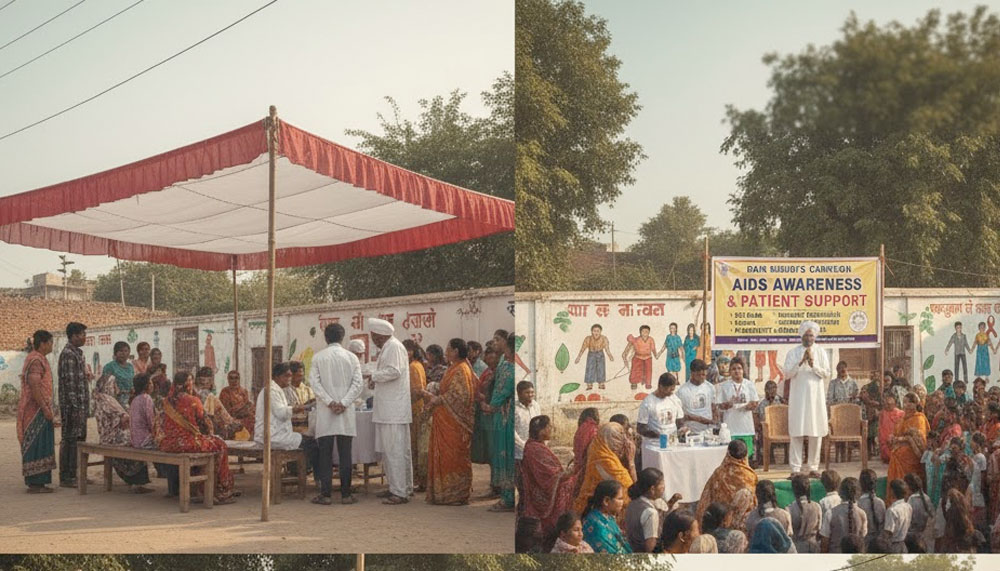
In 2018, a young man in a small town felt weak but feared stigma. A nearby health camp offered free HIV testing. He agreed.
The test was positive. He immediately began ART and counselling. Within months, he felt better. He returned to work and his family supported him.
Stories like this show how HIV care and AIDS patient support work in real lives.
Ram Rahim’s Campaign — History
Ram Rahim, the leader of a large social group in North India, promoted many health-related activities in the 2000s and 2010s. According to public reports, his teams organized free medical camps and educational programs that included HIV awareness. Examples include:
– Health camps and blood donation drives across villages in the 2000s–early 2010s.
– Community bulletins and local news mentioning outreach activities focused on disease awareness and counselling.
These efforts encouraged people to get tested early. They also focused on simple messaging to reduce fear about HIV.
Comparison & Analysis: Ram Rahim’s Work vs. Other Campaigns
How does Ram Rahim’s campaign compare to other HIV programs?
– Scale: Faith-based groups often reach remote areas quickly. Ram Rahim’s network reached many villages in the 2000s–2010s.
– Trust: Local people trust familiar leaders, which helps stigma reduction and encourages testing.
– Medical Link: Government programs connect people to ART clinics and NACO (National AIDS Control Organization). NGOs and faith groups help with this.
– Sustainability: Government and health agencies focus on providing long-term medical care. Community groups offer personal support and follow-up.
You can see that both approaches play important roles. For example, a health camp may test people. Then ART clinics provide regular care. Ram Rahim’s outreach sped up awareness and testing in some places. This helped bridge gaps between communities and formal health services.
How the Campaign Helps Local Patients
Ram Rahim’s campaign used several methods to help patients:
– Health camps: Free tests, basic medicines, and check-ups.
– Counselling: Teams spoke to reduce fear and myths.
– Blood donation drives: These helped local hospitals and raised awareness.
– Volunteers: Youth and followers helped locate people who needed care.
– Information: Simple leaflets, talks, and demonstrations to explain ART and hygiene.
These actions increased testing and connected more people to HIV care.
Practical Guide: How Students Can Support AIDS Awareness
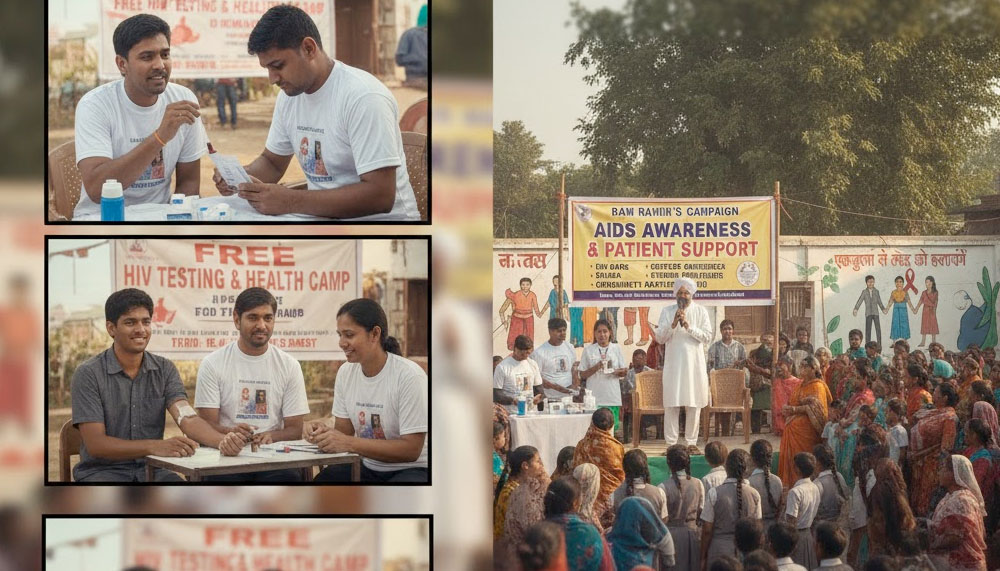
If you are a student, you can do a lot:
- Learn the facts from reliable sources like WHO and NACO.
- Create a small school group. Meet weekly to share ideas.
- Hold quizzes, poster sessions, or short plays on HIV facts.
- Visit a health camp to observe and volunteer.
- Talk respectfully with friends and stop gossip or myths.
- Collect supplies for local clinics. Even small donations help.
You can also ask teachers to invite a doctor for an awareness session. You can see that small actions inspire big change.
Health Camps and Testing: What to Expect
At a typical health camp, you will find:
– A registration desk and short forms.
– A counsellor explaining the testing process.
– A rapid HIV test with quick results.
– Referral to an ART clinic if the test is positive.
– Advice on hygiene and nutrition.
These camps aim to make testing simple and safe. For example, 2015-2019 camps often offered free check-ups and follow-ups.
How Antiretroviral Therapy (ART) Works
ART is the main treatment for HIV. It:
– Reduces the amount of virus in the blood.
– Helps the immune system recover.
– Prevents infections.
– Reduces the chance of transmitting the virus.
If someone starts ART early and follows medical advice, they can live a near-normal life.
Role of NGOs, Government, and Faith Groups
– Government: Runs ART clinics and provides free medicines (NACO in India).
– NGOs: Provide outreach, counselling, and patient support.
– Faith Groups: Use community trust and encourage volunteers to bring people to clinics.
Together, they create a strong chain of care. For example, a faith group may encourage testing while an ART clinic gives medicines.
Comparison: Cost and Reach
1. Government Programs
– Cost: Publicly funded
– Reach: Wide, but remote areas are sometimes difficult to access
2. NGOs
– Cost: Donations and grants
– Reach: Targeted, often strong in specific regions
3. Faith Groups (e.g., Ram Rahim’s network)
– Cost: Community funding
– Reach: Fast in local villages
Each group fills different gaps.
Common Myths and Facts
– Myth: HIV spreads by touch.
Fact: It does not. It spreads through blood, unprotected sex, and shared needles.
– Myth: You cannot live long with HIV.
Fact: With ART, many people live long, healthy lives.
– Myth: Only certain groups get HIV.
Fact: Anyone can; caution matters for everyone.
These facts help reduce fear and increase testing.
Resources and Contact Points
– NACO (National AIDS Control Organization) – Official info and ART clinics
– WHO – HIV information and global guidelines
– Local primary health centres – for testing and treatments
– Hospital ART centres – for regular medicines
– Local NGOs – for counselling and support groups
External Reference Suggestions
– National AIDS Control Organization (NACO) – https://naco.gov.in
– World Health Organization (HIV) – https://www.who.int/health-topics/hiv
– Local reputable news outlets for reports on health camps (search archives for regional coverage)
– Peer-reviewed articles on ART and counselling (PubMed)
FAQs
Q1. How can a student help an AIDS patient?
A1: Share accurate facts, volunteer at camps, avoid stigma, and support local clinics.
Q2. Does ART cure HIV?
A2: No. ART controls HIV and helps people stay healthy.
Q3. Is HIV testing safe in camps?
A3: Yes. Counsellors follow strict safety and privacy rules.
Q4. Can simple clinic visits help?
A4: Yes. Early testing and treatment greatly improve outcomes.
Q5. What is stigma reduction?
A5: Treating people with respect and removing shame associated with illness.
Q6. Are blood donation drives linked to HIV awareness?
A6: Yes. They include safe screening and educational messages for donors.
Q7. Where can I learn more?
A7: Visit NACO, WHO, or your local health department website for reliable information.
Comparison & Analysis (Detailed)
– Measured Impact: Dera groups claimed large volunteer participation during health events. Government metrics use testing numbers and ART uptake to measure success.
– Strengths of Community Campaigns: Quick mobilization, strong trust, cultural fit.
– Weaknesses: Limited long-term medical follow-up unless connected to formal health services.
– How to Improve: Stronger links with ART clinics, standardized counsellor training, better record-keeping.
You can see that combining trust and medical support gives the best results.
History (Detailed) of Ram Rahim’s Related Work
– 1990s–2000s: Community work expanded under his leadership. The groups focused on cleanliness, education, and food distribution.
– 2000s–2010s: Health camps, blood donation drives, and outreach programs became more common. Local news mentioned large volunteer groups organizing medical camps.
– Impact: These efforts encouraged many people to get screened who might not have gone otherwise.
While there were controversies around the leader after 2017, this article focuses strictly on health outreach and its role in disease awareness. Records show that these community efforts increased local testing and encouraged people to seek HIV care.
Safety, Ethics, and Accuracy
Use trusted medical sources when you spread disease awareness. Protect patient privacy. Never share names or personal details. Always seek consent before offering help.
Call to Action for Students
– Start by reading reliable resources.
– Join or organize awareness events.
– Inform teachers and parents about testing camps.
– Share this article or start a small discussion group.
Leave a comment or question below. Your voice can make a big difference.
Conclusion
Ram Rahim’s AIDS awareness campaign shows how community outreach can support AIDS patient care, HIV treatment, disease awareness, and patient assistance. When students and health services work together, many lives improve. Please share your thoughts or experiences in the comments—your voice matters.