


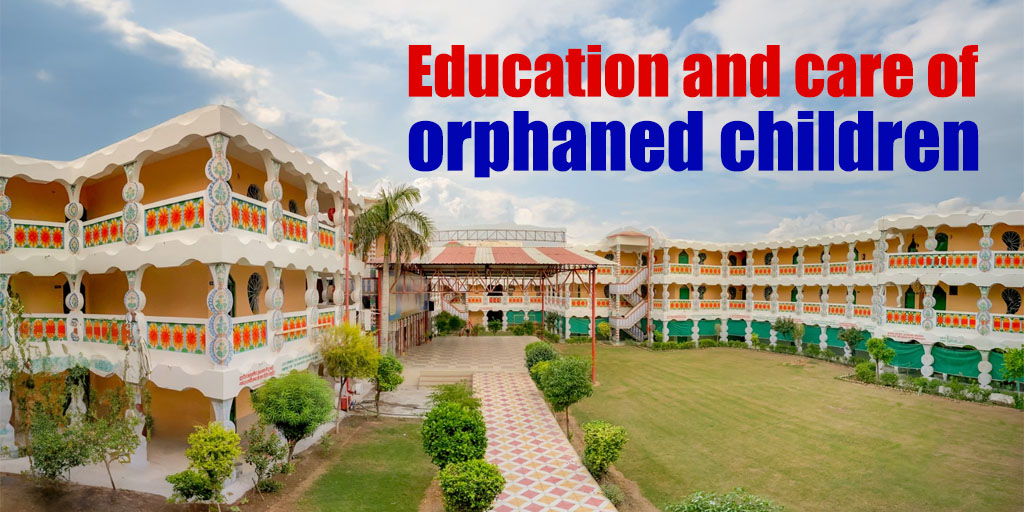
Education and care of orphaned children
These words first touched my heart on a quiet winter morning when I visited a small orphanage on the outskirts of my hometown. I was barely eighteen then, curious yet unaware of the silent struggles these children faced every single day. The soft chatter of young voices, the innocent laughter echoing through the courtyard, and the hopeful eyes looking at visitors like me — each moment opened a new chapter in my understanding of life and humanity.
How Education and Care Empower Orphaned Children
That day, as I distributed notebooks and pencils among the children, I realised that education and care were not mere acts of charity; they were bridges of transformation. Behind every orphaned child was a story of pain, but also the untapped potential of greatness. A little girl named Meena clutched her tattered book and told me, “I want to be a teacher someday, so that no child like me ever feels left behind.” Those words, simple yet profound, became the seed of inspiration that grew within me over the years.
The Social Reality and Challenges Faced by Orphaned Children
In our society, education and care of orphaned children are often seen as responsibilities of governments and institutions. But in truth, it is a shared moral duty of humanity. These children, who lose their parents to fate, deserve the same opportunities, guidance, and love as anyone else. Unfortunately, the reality remains harsh. Many orphaned children in India and around the world struggle to access proper education, nutritious food, healthcare, and emotional stability. Without a guiding hand, many fall into cycles of poverty, neglect, and exploitation.
As I started volunteering at different shelters and NGOs, I began to understand the deeper meaning of “care.” Care is not limited to feeding or clothing a child; it is about nurturing confidence, trust, and hope. True care of orphaned children lies in helping them dream again — in giving them the strength to believe that they too can shape their destinies through education and compassion.
Orphaned Children: From Hopelessness to Opportunity Through Education
Education, on the other hand, is the most powerful weapon that can change the fate of an orphaned child. A single opportunity to study can transform a life from dependence to dignity. Every letter they learn, every word they write, every book they read — it all becomes a step toward freedom and self-respect. Education is not just about academics; it teaches them how to think, to question, to express, and to rise.
I remember once meeting a boy named Raju at a government orphanage. His parents had passed away in a road accident when he was just five. For years, he grew up in silence, withdrawn from the world. But one teacher noticed his talent for drawing. She encouraged him, gave him sketchbooks, and motivated him to participate in competitions. Years later, Raju became a graphic designer working for a multinational company. When I met him again, his eyes sparkled with gratitude. “If someone hadn’t cared,” he said, “I would still be lost in darkness.”
This, to me, is the real essence of the education and care of orphaned children — the power to transform hopelessness into purpose, dependency into confidence, and loneliness into belonging.
When I think about the education and care of orphaned children, I don’t just see numbers or statistics. I see faces. I see stories of resilience. I see children who fight every day to carve their identity in a world that often forgets them. Their challenges are multifaceted — lack of resources, emotional trauma, absence of parental guidance, and sometimes, societal discrimination.
To educate an orphaned child is not merely to fill their mind with knowledge but to heal their spirit. Care and education together form the two pillars that support their growth — one nourishes the heart, and the other enlightens the mind.
The world is full of examples where education changed the destiny of orphans. Abraham Lincoln, Nelson Mandela, and even some of India’s great reformers grew up amid hardships but used education as their ladder to greatness. Today’s orphaned child could be tomorrow’s leader, scientist, or teacher — if only given a chance.
At this point in my life, I realised that the education and care of orphaned children were not just noble causes; they were essential for building a compassionate, progressive society. When a nation invests in its orphaned children, it invests in its own future.
Whenever I think of the education and care of orphaned children, I recall the quiet moments spent in orphanages, schools, and rural shelters — places where hope flickers like a lamp even in the darkest corners. Education, for these children, is not simply a privilege; it is their survival tool, their key to unlocking the future.
As someone who has volunteered for years in social initiatives, I have seen with my own eyes how education brings light into the lives of children who have known only loss. Once, during a visit to an orphanage in Haryana, I met a boy named Suraj. His eyes shone with curiosity, but his voice trembled when he read aloud from his English textbook. He told me he wanted to learn computers, but his school had no computer lab. That night, as I lay awake, I couldn’t forget his words.
Two months later, I returned with two old computers donated by friends. Suraj and his classmates learned to type, paint, and even write simple code. Within a year, Suraj became one of the brightest students in his class. His transformation reaffirmed my belief that education for orphaned children is not just about textbooks — it’s about empowerment, self-expression, and discovery.
In my journey of understanding the education and care of orphaned children, I realised that teachers play the most crucial role. A good teacher is often the first parent these children find after losing their own.
I once met Sister Maria, a teacher at a mission school in Delhi, who told me, “Teaching orphans is not about finishing the syllabus. It’s about filling the emptiness of their hearts with hope.” Her words touched me deeply. Teachers like her don’t just teach — they nurture. They become role models who inspire children to believe in themselves.
I’ve also seen NGOs run programs where college students volunteer to teach and guide orphan children. Such programs bridge the emotional and educational gap. A small group called Udaan Foundation runs a “Buddy for Every Child” initiative, pairing volunteers with orphaned children for weekly study sessions. I volunteered there once, helping a boy named Ramesh with math. But in truth, he taught me far more — about resilience, about smiling through struggle, and about the human spirit’s incredible power to endure.
This shows that the education and care of orphaned children is not only the government’s duty. It’s a collective social movement that needs teachers, mentors, volunteers, and citizens with compassionate hearts.
The real magic of education and care of orphaned children lies in transformation. Education transforms fear into courage, helplessness into self-reliance, and sorrow into strength. When an orphaned child earns a degree or learns a trade, the cycle of poverty and dependency breaks forever.
A Vision for the Future

Looking ahead, I dream of a world where every orphaned child has access to love, learning, and opportunity. A world where organisations like Dera Sacha Sauda, Smile Foundation, SOS Villages, and thousands of others work hand in hand with citizens to build a nation where no one is ignored. If every educated person takes responsibility for just one orphaned child — by sponsoring, mentoring, or simply caring — we could rewrite countless destinies. The education and care of orphaned children should not remain a project; it must become a movement that defines the moral fabric of our country.
FAQs
Q 1. Why is education important for children without parents?
Education helps them gain skills, confidence, and a chance for a better future.
Q 2. How does care support a child’s learning?
Care provides emotional support, guidance, and a safe environment for growth.
Q 3. What challenges do children without families face in school?
They often struggle with lack of resources, food, and consistent support.
Q 4. How can volunteers help these children?
Volunteers can teach, mentor, and provide learning materials.
Q 5. Which organizations support children who lost their parents?
NGOs like Dera Sacha Sauda, Smile Foundation, and SOS Villages run programs for them.
Q 6. Can education change their lives?
Yes, learning builds confidence and opens new opportunities for the future.
Q 7. What role do teachers play in their development?
Teachers guide, inspire, and provide mentorship for emotional and academic growth.
Q 8. How can society help these children?
People can volunteer, donate, mentor, or provide care to support their growth.
Q 9. Are there real-life examples of success through education?
Yes, many children have transformed their lives by learning and receiving proper care.
Q 10. What steps improve education and care for these children?
Provide schools, teachers, mentorship, health support, and emotional guidance.